Breathe in Time
Your health deserves regular check-ups. So do your lungs.
We have regular check-ups to look after our skin, heart, eyesight, and gynaecological or prostate health.
However, our lungs are often left off that list.





Rapid diagnostic pathway for suspected lung cancer
When lung cancer is suspected, every moment counts.
That is why GenesisCare and Clínica Corachan have created Breathe in Time, a rapid diagnostic pathway within the GCCC 360 Centre of Excellence in Oncology.
From the outset, we coordinate all the necessary tests to reach a medical diagnosis sooner and, if cancer is confirmed, begin treatment as quickly as possible.

What is Breathe in Time?
Breathe in Time is a diagnostic pathway designed for people with suspected lung cancer or risk factors who need a prompt medical assessment.
It is not just about carrying out tests more quickly. It is about ensuring that the entire process is organised from the outset:

The aim is to avoid unnecessary delays and help patients move forward with greater clarity.
Why is it important to save time?
In lung cancer, reaching a diagnosis sooner can provide an opportunity to take action earlier.
In conventional diagnostic pathways, completing all the necessary tests can take more than 90 days. During this time, patients may go through multiple appointments, tests, results and referrals.
With Breathe in Time, GenesisCare and Clínica Corachan coordinate tests from the outset to shorten this process.
From months to weeks
Is Breathe in Time right for me?
This pathway is designed for people with clinical suspicion of lung cancer or risk factors associated with the disease. It is not a substitute for emergency medical care or a general preventive health check-up.


When should you seek medical advice?
Consult your doctor if you have any of these symptoms or risk factors:





Who is this pathway intended for?
Breathe in Time is intended for patients who need further investigation for suspected lung cancer.
In particular:
Having one of these symptoms does not necessarily mean you have lung cancer. However, it may be a reason to seek a medical assessment.
If in doubt, consult your doctor.
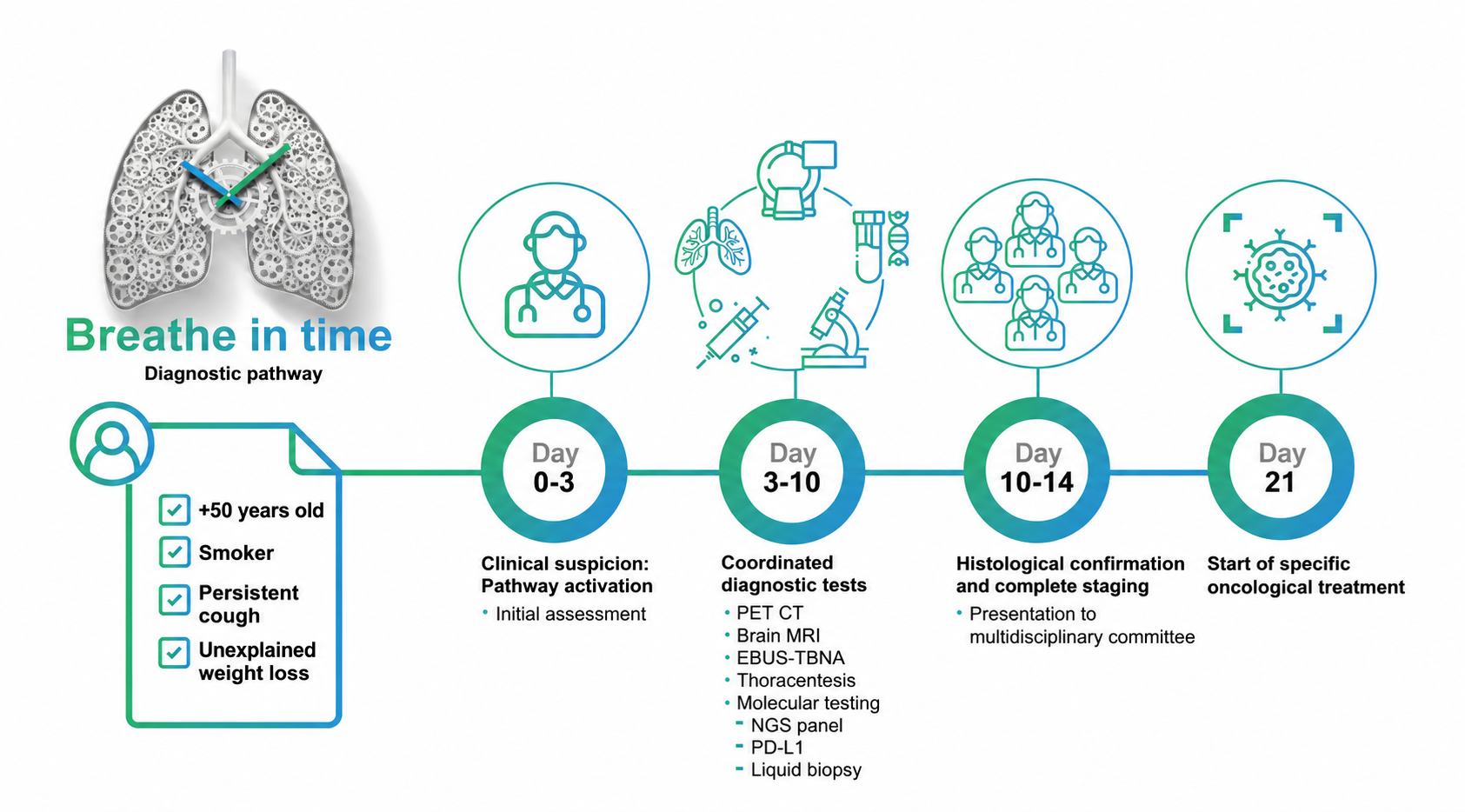
How does the pathway work?
Day 0–3
Clinical suspicion and pathway activation
The process begins when there is a suspected condition: symptoms, risk factors or an imaging test that requires further investigation.
The medical team reviews the case and activates the diagnostic pathway.
Day 3–10
Coordinated diagnostic tests
During this phase, the necessary tests are organised to gain a better understanding of the patient’s condition.
These may include:
Advanced imaging tests
These help identify the location of the lesion and whether other areas are affected.
Diagnostic procedures
These allow a sample to be obtained to confirm whether a tumour is present.
Molecular testing
This analyses the characteristics of the tumour to help guide treatment if the diagnosis is confirmed.
Day 10–14
Diagnostic confirmation and complete staging
At this stage, the aim is to confirm the diagnosis and determine the extent of the disease.
This helps answer key questions:
Is it lung cancer?
What type of tumour is it?
Where is it located?
Has it spread?
Which treatment may be most appropriate?
The case is presented to a multidisciplinary team, where different specialists jointly assess the most appropriate strategy.
Day 21
Start of treatment
If the diagnosis is confirmed and treatment is indicated, the aim is to start treatment within 21 days.
Treatment may include surgery, radiotherapy, systemic therapy or other options, depending on each individual case.
A coordinated team from the outset
Lung cancer may require the involvement of different specialists.
At the GCCC 360 Centre of Excellence in Oncology, the pathway brings together a multidisciplinary team to ensure that each case is thoroughly assessed.
What Breathe in Time offers
Tests are coordinated from the outset.
Greater clarity
Patients move forward step by step through a clearly defined pathway.
Coordinated medical decision-making
Each case is reviewed by a multidisciplinary team.
Earlier start of treatment
If the diagnosis is confirmed, the aim is to start treatment within 21 days.
Ongoing support
Patients are supported throughout the process.
Note:
Timeframes may vary depending on the patient’s clinical condition, the tests required and the availability of healthcare services.
Can this pathway determine whether I have lung cancer?
Breathe in Time is designed for people with clinical suspicion of lung cancer, risk factors or suspicious findings on an imaging test. If you have concerns about your risk, consult your doctor.
Does having a persistent cough mean I have lung cancer?
Not necessarily. A cough can have many causes. However, if it lasts for several weeks, you cough up blood, experience weight loss or have a history of smoking, it is advisable to seek a medical assessment.
Can I request information directly?
Yes. You can contact GCCC for guidance. The team will advise you on the next steps and whether the pathway needs to be activated.
What does staging mean?
Staging helps determine the extent of the disease. In other words, it establishes whether the tumour is localised or has spread to other areas. This information is essential for deciding on the most appropriate treatment.
Do all patients start treatment within 21 days?
The pathway is committed to organising the process so that treatment can begin within 21 days, when the diagnosis and the patient’s clinical condition allow.

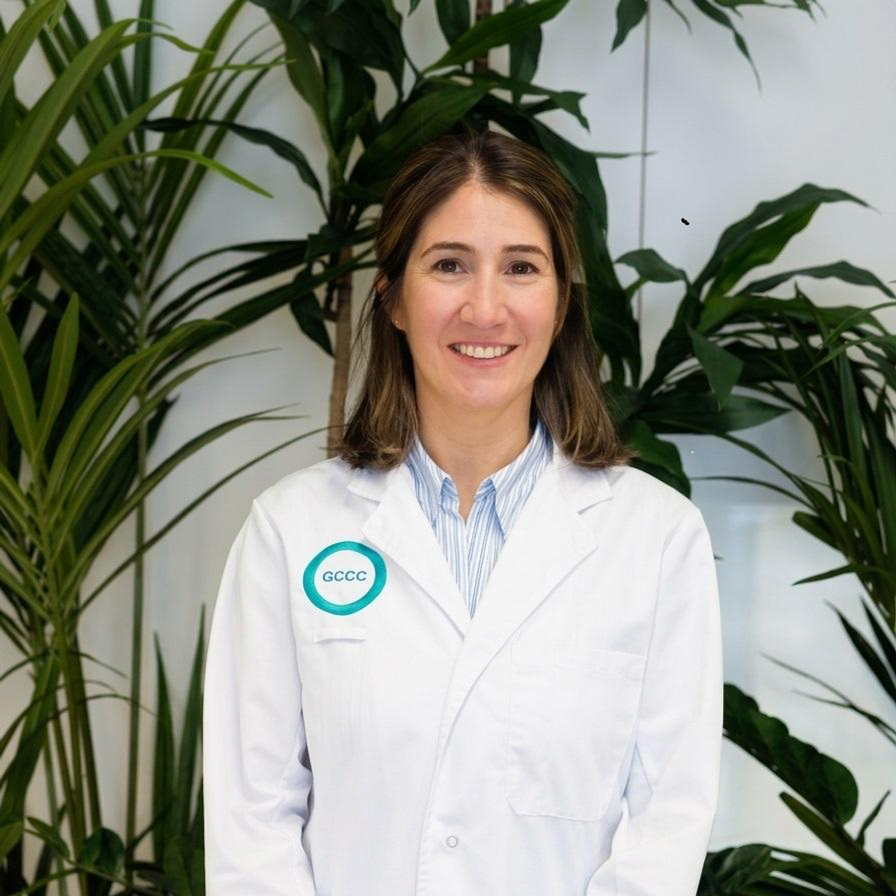
We want to ensure that suspected lung cancer cases are not delayed by long waiting times, tests and disconnected appointments.
That is why, at GenesisCare and Clínica Corachan, we have created a rapid diagnostic pathway coordinated by Dr Florencia García Casabal, who leads Breathe in Time, to support patients at every stage of the process through to diagnosis and, if necessary, to start treatment as soon as possible.


